
“I’m running late.”
“I don’t have time.”
“I’m five minutes away.”
These are not just phrases.
They are signals.
They point to a quiet shift in how we experience time.
At some point, time stopped being something we moved through and became something we are constantly running out of.
You do not feel rushed only because you are busy.
You feel rushed because your time is constantly being measured.
That distinction matters.
Because when time becomes measurement, life becomes performance.
And when measurement becomes constant, the clock stops feeling neutral.
It starts feeling like pressure.
Time Wasn’t Always a Countdown
For most of human history, time was not precise.
People tracked the day by the position of the sun, seasonal changes, and natural rhythms of work and rest.
It was not exact, but it was sufficient.
You did not wake up at 6:00 AM.
You woke up when the sun rose.
You did not schedule tasks down to the minute.
You responded to what needed to be done within a general window.
Despite this lack of precision, societies functioned.
Work was completed.
Life moved forward.
Time existed.
The Shift From Measurement to Pressure
Modern timekeeping introduced precision.
Clocks became standardized, synchronized, and widely enforced.
This made large-scale coordination possible.
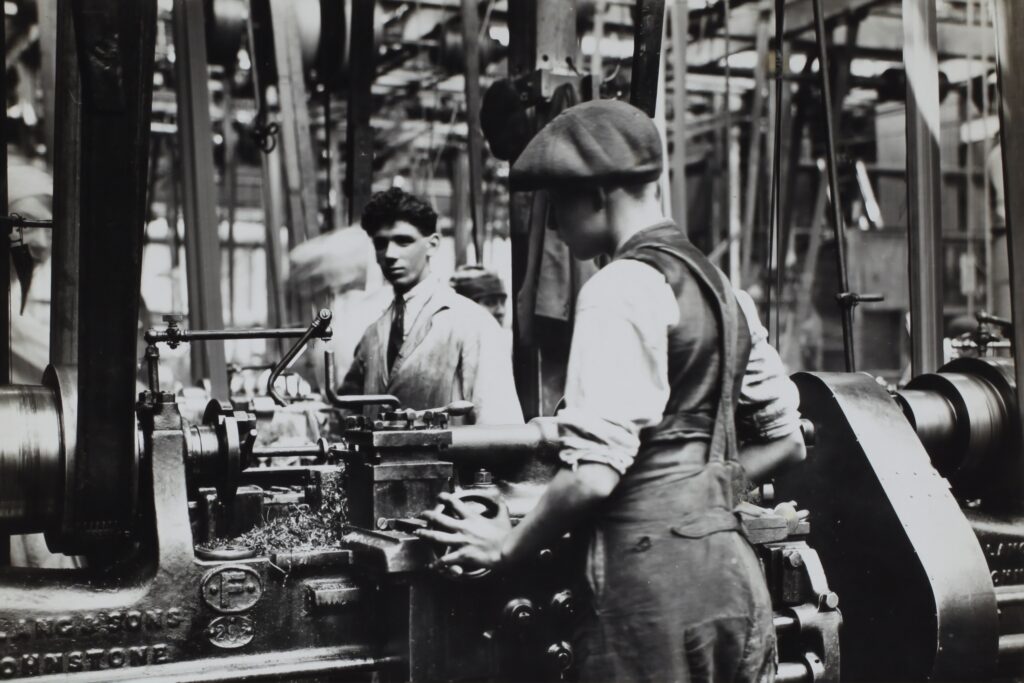
Industrial work schedules.
Transportation systems.
Institutional operations.
Appointments.
Schools.
Factories.
Offices.
But something else came with it.
Time stopped being a reference point and became a constraint.
Instead of asking:
Where am I in the day?
We started asking:
How much time do I have left?
That shift seems small.
But it changes how time feels.
A reference does not create pressure.
A countdown does.

The Lightbulb and the Removal of Natural Limits
One of the most important accelerators of this shift was artificial light.
Most discussions focus on what the lightbulb added:
- light after dark,
- extended productivity,
- safer environments,
- and more usable hours.
But its deeper impact is what it removed.
Before artificial light, daylight defined activity and darkness enforced rest.
There were natural boundaries to the day.
After artificial light, those boundaries weakened.
Schedules became independent of the environment.
Time could be enforced regardless of physical conditions.
This created a new structure:
Before: nature enforced limits.
After: systems enforced limits.
Now, 6:00 AM is 6:00 AM whether it is light or dark, summer or winter, whether you are ready or not.
If you arrive at 6:05, you are late.
Not because the world changed.
Because the system requires precision.

When Precision Becomes Pressure
Precision enables efficiency.
But when applied everywhere, it creates pressure.
Instead of flexible time windows, you now have fixed deadlines, exact start times, tightly scheduled days, and narrow arrival expectations.
Even small deviations — five or ten minutes — can carry consequences.
This creates a constant underlying state:
You are always either on time, or falling behind.
There is no neutral position.
That is the psychological cost of total precision.
The clock does not simply tell you where you are.
It tells you whether you are failing.
The Hidden Cost: Constant Time Awareness
Modern life does not just require you to use time.
It requires you to monitor it continuously.
You check the clock.
You calculate travel time.
You estimate delays.
You adjust schedules in real time.
You compare where you are against where you are supposed to be.
This creates ongoing cognitive load.
Time is no longer passive.
It demands attention.
Every time you recalculate, you spend mental energy.
Every time you check whether you are late, you reinforce urgency.
Every time you compress your day into exact timing, you reduce your margin for being human.
Why Time Feels Scarce — Even When It Isn’t
Because time is constantly measured, it begins to feel limited even when it is not.
You might have several free hours.
You might have no immediate obligation.
You might technically be available.
But still feel rushed, behind, or unable to relax.
The issue is not always your schedule.
Sometimes it is your relationship to time.
When every minute is tracked, every minute feels like it is being spent.
This is why rest often stops feeling restful.
You are not only resting.
You are watching rest disappear.
That turns recovery into another countdown.
The System-Level Reality
This is not just a personal experience.
It is structurally reinforced.
Modern systems depend on punctuality, synchronization, and measurable output.
Employers, institutions, schools, transportation systems, healthcare systems, and service providers all rely on precise timing to function.
From a systems perspective:
The more precisely time is measured, the more tightly human behavior can be directed.
Precision enables coordination.
Coordination enables scale.
Time becomes the mechanism that enforces it.
This is why clocks feel neutral individually but powerful collectively.
One clock tells time.
A society of clocks governs behavior.
How This Shows Up in Daily Life
You do not need to analyze systems to notice the effects.
They appear in simple ways.
Rushing between commitments.
Feeling late even with minor delays.
Structuring your day around exact times instead of energy.
Struggling to relax even when free.
Checking the clock during rest.
Feeling anxious before appointments.
Measuring productivity by hours instead of outcomes.
Time stops feeling like a tool.
It starts feeling like a constraint.
And once that happens, even free time can feel supervised.

Reclaiming a Healthier Relationship With Time
You do not need to reject clocks or schedules.
They are necessary.
But you can change how much influence they have over your experience.
The goal is not to become careless with time.
The goal is to stop letting precision dominate spaces where precision is not required.
1. Separate System Time From Personal Time
Not all time needs the same level of precision.
System time is for work, appointments, travel, deadlines, and coordination with other people.
Personal time is for rest, thinking, recovery, wandering, reading, walking, and recalibration.
Use precision where it is required.
Relax it where it is not.
This distinction matters because many people let system time colonize personal time.
They rest on a clock.
They think on a clock.
They recover on a clock.
They turn every part of life into scheduled output.
That is not structure.
That is over-measurement.
2. Use Time as Ranges, Not Exact Points
Instead of saying, “I need to do this at 2:00 PM,” shift to, “I’ll do this in the afternoon.”
Instead of forcing every personal task into a precise slot, use windows.
Morning.
Afternoon.
Evening.
After lunch.
Before bed.
This reduces pressure without reducing effectiveness.
Exact timing is useful when coordination requires it.
But when no one else depends on the exact minute, precision may be unnecessary pressure.
A range gives your nervous system room to move.
3. Reduce Constant Time Checking
You do not need to monitor time continuously.
Limit unnecessary clock checking, recalculation, and reactive schedule adjustment.
Check time when it helps you coordinate.
Do not check it merely to confirm anxiety.
Less monitoring creates more focus.
It also restores trust.
When you stop checking every few minutes, your attention can settle into the thing you are actually doing.
That is where presence returns.
4. Build Buffer Into Your Day
Most schedules are too tight.
They assume perfect transitions, perfect energy, perfect conditions, and no interruptions.
Real life does not work that way.
Adding buffer absorbs delays, reduces urgency, and prevents cascading stress.
A schedule with no margin creates pressure.
A schedule with margin creates stability.
Buffer is not wasted time.
It is stress insurance.
It gives the day enough slack to remain human.
A Different Way to Think About Time
Time does not need to feel like a countdown.
It can return to being a reference.
A guide.
A structure.
A way to orient yourself.
Not a constant signal that you are running out.
This is not about moving slower.
It is about moving with less pressure.
When time becomes a tool again, you stop reacting to the clock as if it is always accusing you.
You still arrive.
You still coordinate.
You still meet obligations.
But you do not let the countdown structure your entire inner life.
Closing Perspective
Modern life requires coordination.
Coordination requires precision.
But precision does not need to dominate every moment.
When clocks became countdowns, we gained efficiency but lost flexibility.
The goal is not to escape time.
It is to stop treating time like it is always running out.
When you do that, something subtle changes.
You do not move slower.
You move with less pressure.
And that difference compounds across everything else.