June 5, 2026

The Storage Rule: If You Need Storage, You’ve Already Drifted.

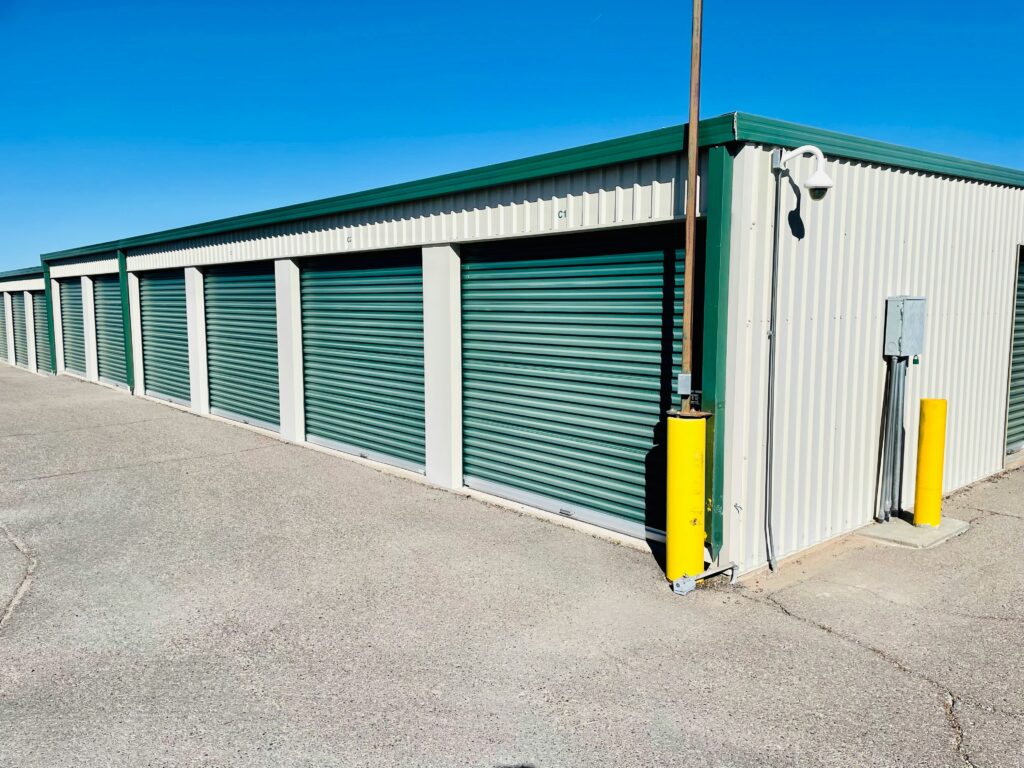
Photo by Adam Winger on Unsplash


I use storage — but not the way most people do.

For me, storage is not part of my lifestyle.

It’s a temporary device.

A bridge.

Something I use only when I am between living situations — not while I have one.

Because the rule is simple:

If I have a home and still need storage, I’ve already drifted.

Most People Solve the Wrong Problem

In the West, storage is framed as a solution.

You run out of space, so you rent more space.

You accumulate more, so you upgrade the unit.

Eventually, you’re paying to store things you don’t even use.

The system never asks the real question:

Why did your life expand beyond your control?

Instead, it quietly accommodates the expansion.

Storage Is Not Neutral

Storage feels harmless because it’s out of sight.

But it’s not neutral.

It does three things:

  1. Removes friction from accumulation
  2. Delays decision-making
  3. Creates a second life you don’t actively manage

You end up with two environments:

  • The life you live
  • The life you’ve deferred

Storage as Silent Drift

Storage solves the symptom, not the cause.

It allows:

  • Overflow without consequence
  • Accumulation without awareness
  • Decisions to be delayed indefinitely

You don’t feel the weight immediately.

You just keep going.

The Disposal Problem

One thing I didn’t fully understand until I moved internationally is how difficult disposal actually is.

Even with a small apartment, getting rid of everything took:

  • Time
  • Coordination
  • Decision-making energy

And that was with a relatively controlled amount of stuff.

Now scale that up.

When people move items into storage, they assume they’re preserving value.

But what they’re actually doing is deferring disposal.

For more on the Importance of time read: Time is the Real Currency 

Disposal Is Not Free

Getting rid of things has real costs.

Economic

  • Hauling fees
  • Donation logistics
  • Lost resale value
  • Abandoned items

Structural

  • Time spent sorting
  • Decision fatigue
  • Scheduling pickups
  • Dealing with partial solutions

Psychological

  • Attachment
  • Avoidance
  • Guilt around waste

Most people only account for the cost of storing something.

They don’t account for the cost of eventually getting rid of it.

Storage Compounds the Problem

Storage makes this worse in three ways.

1. Volume Increases

You store more than you would normally keep.

2. Time Delay Increases Difficulty

The longer something sits:

  • The less relevant it becomes
  • The harder it is to evaluate
  • The more likely it is to be abandoned

3. The Exit Becomes Overwhelming

Eventually, you face a large, compressed decision problem:

What do I do with all of this?

That moment is where people procrastinate, pay someone else, or walk away from it entirely.

The Retrieval Tax

Even if you ignore disposal, storage creates another problem:

Getting your things back is not frictionless.

Imagine you need something simple.

A seasonal item. An old document. A box you haven’t touched in years.

If your storage unit is large — even if it’s “organized” — you still have to:

  • Travel to the unit
  • Unlock and access it
  • Locate the correct section
  • Move other items out of the way
  • Search through boxes

That’s time.

That’s energy.

That’s friction.

The Larger the Unit, the Higher the Cost

People assume organization solves this.

It doesn’t.

Because over time:

  • Memory fades
  • Systems degrade
  • Items shift

What was once “organized” becomes:

A physical archive you have to manually query.

And unlike digital systems, there is no search function.

Photo by Zoshua Colah on Unsplash

Environment Risk

Storage also introduces environmental uncertainty.

Depending on the location and conditions, items may be exposed to:

  • Heat and humidity
  • Dust and degradation
  • Pests and rodents

Even well-managed units are not perfect.

And the longer items sit, the higher the probability that something goes wrong.

The Hidden Liability

Stored items are not neutral.

They are:

Future work that you’ve committed yourself to without a deadline.

And like most deferred work, it grows.

The Inversion

Most people use storage like this:

Life expands → storage absorbs it.

I use it like this:

Transition happens → storage temporarily holds → system resets.

The Rule

There are only two valid states:

1. You Have a Home

  • Everything fits inside it
  • No storage

2. You Are in Transition

  • Storage is temporary
  • Minimal, intentional, time-bound

Anything else is drift.

The Constraint

Even in transition, I impose a limit.

  • Start with a micro locker
  • Cap at a small unit

If I feel pressure to expand beyond that:

That’s not a storage problem. That’s a system failure.

The Full Cost

Now combine everything:

  • Monthly storage cost
  • Disposal cost in the future
  • Retrieval cost over time
  • Environmental risk

What looks like a simple decision:

I’ll just store this.

Becomes:

A layered system of hidden costs.

Why This Matters

This is not about minimalism.

It’s about control.

When you allow overflow:

  • You remove friction
  • You weaken decision-making
  • You normalize excess

Your life expands quietly — until it becomes difficult to move, adjust, or reset.

Why This Is Worse in the West

In the West:

  • Space is abundant
  • Storage is normalized
  • Accumulation is invisible

You can drift for years without noticing.

Until:

  • Moving becomes overwhelming
  • Decisions become heavy
  • Your life becomes anchored to things you don’t use

The Goal

The goal is not to own less.

It’s to remain operational.

Your life should fit inside the space you actively live in.

And when you leave that space:

It should compress easily, temporarily, and without friction.

Final Thought

Storage is not a solution.

It’s a signal.

If you need it while you already have a place to live:

You’re not managing your life.

You’re expanding it beyond your control.

For More please Read:

Leave a Comment

Your email address will not be published. Required fields are marked *