
 It’s cheaper” is often the most expensive decision you can make.
In Chiang Mai, you’ll hear the same advice repeated over and over:
“Just do a border run. It’s cheaper.”
The math sounds simple.
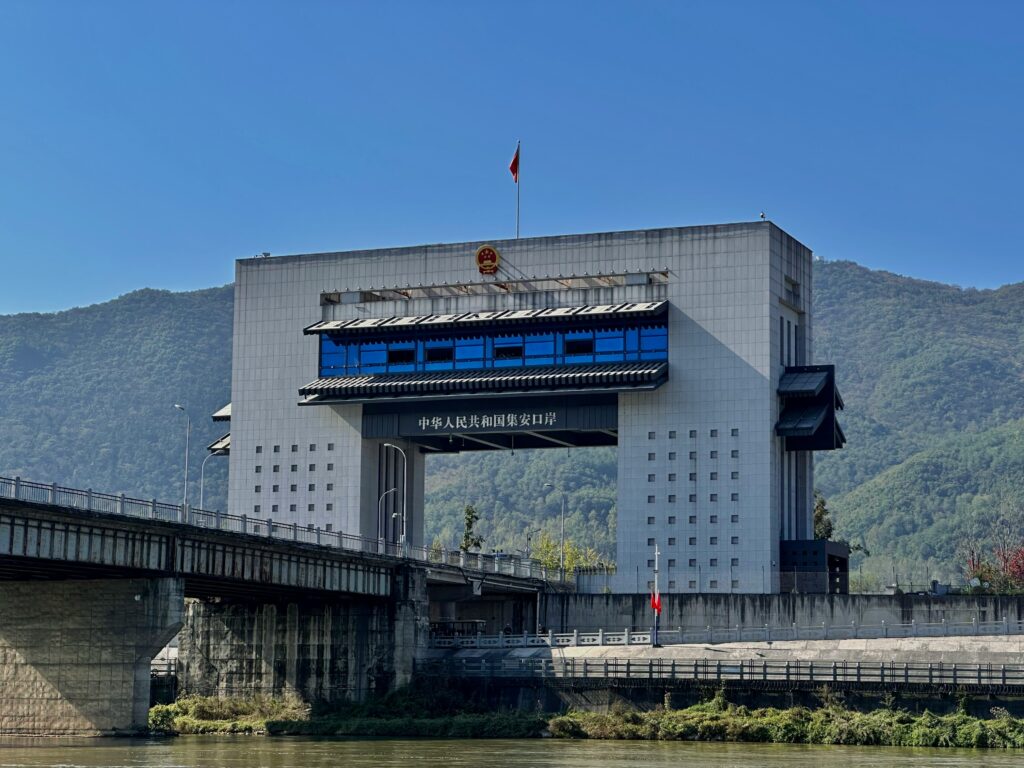
Instead of flying out of the country to activate a visa, you take a van to the border, cross, and return the same day.
You save around $40 to $60.
But here’s what actually happens:
You wake up early
Sit in a van for hours
Wait at the border
Repeat the process in reverse
Lose an entire day
Twelve hours gone.
To save the equivalent of a casual dinner in an expat area.
At first glance, it feels irrational.
Why would anyone trade an entire day to save such a small amount of money?
The Wrong Conclusion
The easy answer is:
“People are making bad decisions.”
But that’s not true.
They’re making perfectly rational decisions—just inside a different system than yours.
The False Assumption
Most people assume everyone is optimizing for the same thing.
They’re not.
What looks inefficient from the outside is often just:
A decision optimized for a resource you’re not tracking.
The Constraint Model
Every person operates under a primary constraint.
Not a preference. Not a belief.
A constraint.
Usually one of four:
Money
Time
Energy
Control
Every decision is an attempt to preserve the constrained resource—even if it sacrifices the others.
Two Systems Colliding
To understand the border run, you have to understand the two systems colliding.
System A: Money-Constrained
Time is abundant
Money is limited
Efficiency = minimize spending
In this system:
A 12-hour day costs nothing.
So saving $50 is meaningful.
System B: Time-Constrained
Money is controlled
Time, energy, and autonomy are scarce
Efficiency = minimize friction
In this system:
A 12-hour day is expensive.
So saving $50 is irrelevant.
The Mispricing of Time
Here’s where things get interesting.
Most people don’t just optimize for the wrong resource.
They misprice the one they’re spending.
The Hidden Conversion
Let’s break down the border run:
Money saved: $50
Time spent: 12 hours
That means the implicit exchange rate is:
$4.16 per hour
The Question That Breaks It
Ask this:
If you wouldn’t work for $4/hour, why are you spending time at that rate?
This is where the illusion breaks.
Because most people would reject a low hourly wage immediately.
But they accept it silently through decisions like:
Long commutes to save rent
Waiting hours for marginal discounts
Traveling inefficiently to save small amounts
They don’t see it as work.
So they don’t price it.
The Quiet Reality
Time trades rarely feel like transactions.
They feel like:
Waiting
Traveling
Delaying
“Saving”
But structurally, they are exchanges.
You are converting time into money.
Just without labeling it.
The Hidden Cost Stack
When someone says:
“I saved money”
They’re only accounting for one dimension.
They’re ignoring:
Time lost
Energy drained
Routine disruption
Cognitive overhead
Opportunity cost
What actually happened is broader.
What Actually Happened
The border run didn’t just cost time.
It cost:
A full day of autonomy
Physical and mental energy
Momentum in your routine
That’s not a $50 decision.
That’s a system-level cost.
Why Money Gets Overprotected
Money feels scarce because it’s visible.
You can:
Count it
Track it
Watch it leave
Time doesn’t behave that way.
It disappears quietly.
So people protect money aggressively…
…and spend time carelessly.
The Structural Error
This leads to a consistent mistake:
People optimize for visible costs and ignore invisible ones.
Money is visible.
Time is not.
So money gets optimized.
Time gets spent.
 Cheap Decisions That Are Expensive
This is where the reversal happens.
Many “cheap” decisions are actually expensive when measured properly.
Examples:
Taking the cheapest flight with terrible timing
Living far away to save on rent
Waiting in long lines to save small amounts
Choosing slower processes to avoid fees
They reduce money.
But increase total system cost.
The Real Definition of Efficiency
Most people define efficiency as:
“Spending less money.”
But that’s incomplete.
A better definition is:
Minimizing total system cost.
That includes:
Time
Energy
Friction
Money
The System You’re Actually Building
If you’re designing your life intentionally, your goal isn’t:
Minimize spending.
It’s:
Maximize autonomy while controlling cost.
That means:
Paying to remove friction
Paying to reclaim time
Paying to preserve energy
The Architect Turn
Here’s the shift most people never make:
They don’t choose their constraint—they inherit it.
They assume:
Money is the most important resource
Saving money is always good
Spending time is always acceptable
But that’s not a universal truth.
It’s just a default system.
Choosing Your Constraint
When you step back, you realize:
You can choose to optimize for:
Money
Time
Energy
Control
But you cannot optimize for all four simultaneously.
Trade-offs are not optional.
They are structural.
The Decision Filter
Before making any decision, ask:
What resource is this optimizing for?
If the answer is not aligned with your priority:
The decision is wrong for you—even if it’s right for someone else.
The Time Conversion Rule
Use this simple tool:
Convert every “saving” into an hourly rate.
This comes from a simple principle: Time Is the Real Currency.
If you save $40 but spend 10 hours:
You’re operating at $4/hour.
Then ask:
Would I willingly accept that rate?
If not:
Don’t accept it indirectly.
The Border Run Reframed
The border run isn’t:
Dumb
Illogical
Irrational
It is:
Perfectly optimized for a system where time is free and money is constrained.
Why It Feels Wrong to You
It feels inefficient because:
You’re operating in a system where:
Time matters
Control matters
Energy matters
So the same decision produces a different result.
The Real Insight
A decision that looks inefficient is often just optimized for a resource you’re not tracking.
The Deeper Layer
There’s an even more important realization:
Time is the only non-renewable resource in the system.
You can:
Earn more money
Reduce expenses
Change environments
But you cannot:
Recover a lost day.
The Cost of Getting This Wrong
When you consistently trade time for small savings:
Your days become fragmented
Your energy becomes inconsistent
Your system becomes inefficient
Over time, this compounds into:
A life optimized for cost—but not for control.
The Alternative
Instead of asking:
“How can I spend less?”
Ask:
“What is this decision costing me in total?”
The New Standard
A good decision:
Preserves time
Reduces friction
Maintains energy
Keeps money within bounds
Not necessarily the cheapest.
But the most efficient.
Closing
Efficiency isn’t universal.
It depends on what you refuse to waste.
Most people refuse to waste money.
Few people refuse to waste time.
You can earn money back.
You can’t recover a wasted day.