
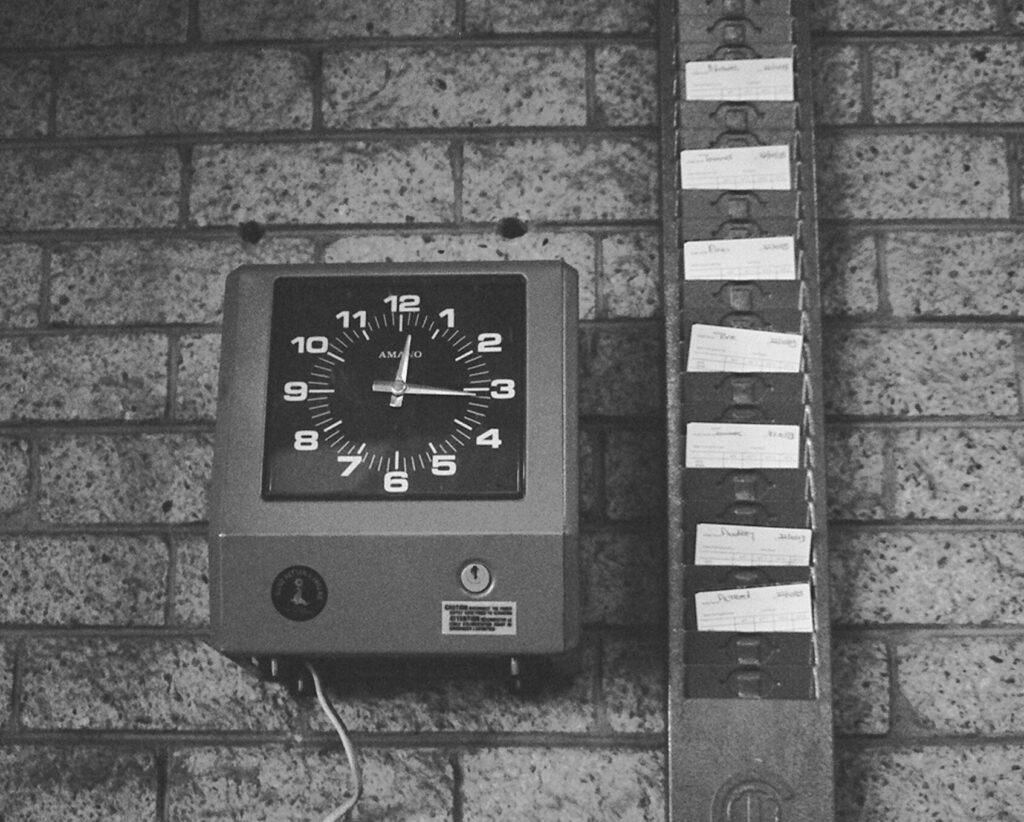
Why most financial advice fails—and how a simple “Autonomy Clock” can restore clarity
Modern financial advice asks people to track the wrong signals.
Watch your net worth
Watch your credit score
Watch your spending categories
Watch the price of coffee
These numbers move constantly, yet they rarely answer the question people are actually worried about.
Not:
“How much money do I have?”
But:
“How long could I survive if things stopped working?”
That question sits underneath most financial anxiety.
Job loss
Retirement fear
Burnout
Entrepreneurial risk
Economic instability
Money matters because it converts into time.
Not leisure time.
Not luxury time.
Survival time.
Breathing room.
Autonomy.
Once you see that clearly, the structure of financial thinking begins to change. And most traditional advice starts to look strangely incomplete.
Why Most Financial Advice Fixates on the Wrong Variables
The dominant model of personal finance focuses on fragments.
Cut small expenses.
Track discretionary spending.
Reduce lifestyle creep.
This advice isn’t entirely wrong. But it focuses on the least important layer of the system.
People are encouraged to obsess over minor spending while making massive structural commitments with almost no feedback mechanism.
Housing costs
Auto payments
Debt load
Insurance obligations
Lifestyle inflation
Career fragility
These structural decisions determine the trajectory of a person’s financial life far more than daily purchases.
Yet the dominant advice model does not provide a clear instrument to measure their impact.
Instead, it replaces systems thinking with moral pressure.
Coffee becomes the villain.
Subscriptions become the problem.
Meanwhile, the real drivers of financial stability remain invisible.
This dynamic produces guilt without clarity.
And guilt is a poor decision-making tool.
The Hidden Question People Are Trying to Answer
Most financial decisions are framed incorrectly.
The typical question is:
“Can I afford this?”
But affordability is not a stable metric.
Income fluctuates.
Expenses evolve.
Life events intervene.
The more accurate question is:
“What does this decision do to my future stability?”
Or more precisely:
“How much time does this decision buy—or cost—me?”
Because at its core, financial stability follows a simple structural equation:
Available resources ÷ spending rate = time
Time until the system must change.
Time until income must be replaced.
Time until financial stress returns.
This is the variable people are subconsciously trying to measure.
But few tools display it clearly.
The Autonomy Clock: A Simpler Instrument
Imagine a financial dashboard designed around one question:
How long can this system continue if nothing improves?
Instead of dozens of charts and projections, it tracks only a few inputs:
Available liquid assets
Outstanding liabilities
Monthly spending rate
From those inputs, the system calculates one output:
Runway.
But the real power appears in the visualization.
Two clocks.
Clock One: Today.
Clock Two: The projected date when current resources would be exhausted.
The distance between those clocks represents the system’s financial horizon.
This simple visualization does something most financial dashboards fail to accomplish.
It converts abstract numbers into a temporal signal the human brain immediately understands.
“43 months” is abstract.
“October 2029” is visceral.
Dates land differently.
When a purchase moves the horizon closer, people feel the effect immediately.
When reduced spending pushes the horizon outward, the gain becomes visible.
No lectures.
Just system feedback.
Conservative Systems Are Psychologically Stable Systems
Many financial tools depend heavily on projections.
They assume:
Future market returns
Stable pensions
Reliable government programs
Consistent employment income
These assumptions may be reasonable, but they introduce fragility.
When the model depends on optimistic assumptions, confidence becomes conditional.
The Autonomy Clock deliberately avoids that problem.
It measures secured time, not promised time.
The question it asks is deliberately conservative:
If all income stopped today, how long would current resources last?
Future income can extend the horizon.
Investment returns can extend the horizon.
But the baseline does not depend on them.
This design principle mirrors how resilient engineering systems are built:
Worst-case baseline first. Upside second.
When a negative event occurs—job loss, market volatility, policy change—the clock does not collapse.
It simply stops expanding.
This creates psychological stability because the system’s foundation is already visible.

Why This Changes Spending Behavior
Traditional budgeting frameworks frame financial discipline as restriction.
Spend less.
Cut more.
Eliminate small luxuries.
The Autonomy Clock reframes spending decisions as trade-offs between present consumption and future autonomy.
Consider a common decision: purchasing a new vehicle.
Most buyers evaluate only the monthly payment.
But the true financial impact includes:
Insurance increases
Fuel expenses
Maintenance
Registration and taxes
When these costs are added to the spending rate, the system recalculates.
The horizon moves.
Suddenly the decision becomes clear:
“This car reduces my financial horizon by 14 months.”
The system does not judge the purchase.
It simply reveals its cost in the most meaningful unit available: future time.
This is the foundation behind The Wallet System—structuring your finances to reduce exposure and make these trade-offs visible before they compound.
People can still choose the car.
But the decision becomes conscious.
Why Financial Advisors Would Benefit from This Model
Financial advisors operate in an environment dominated by uncertainty and client anxiety.
Even clients with substantial assets often worry about running out of money.
Longevity risk
Market volatility
Policy changes
Traditional planning tools rely on projections and Monte Carlo simulations that many clients struggle to interpret.
A temporal instrument can stabilize that conversation immediately.
Consider a client entering retirement with $1.2 million and annual spending of $60,000.
Even under zero market return assumptions, the system shows roughly 20 years of runway.
A 2022 survey by the Employee Benefit Research Institute found that 60% of retirees fear outliving their savings, even when their financial position is stable.
Displaying a conservative horizon can immediately reduce that fear.
Once the baseline safety is visible, advisors can shift the conversation toward growth, tax efficiency, and legacy planning.
How This Can Unlock Generosity
Fear constrains generosity.
When individuals are uncertain about their financial survival, they often decline opportunities to help others.
Consider an elderly client who wants to contribute to a grandchild’s education or first car.
Without clear feedback, the safest decision often becomes “no.”
With a runway visualization, the advisor can model the impact of that gift.
The horizon shifts slightly but remains decades away.
The client gains clarity.
Not reckless generosity.
Informed generosity.
Credit Cards Lose Their Psychological Advantage
Credit cards exploit a behavioral bias known as payment decoupling.
The purchase occurs today.
The financial pain occurs later.
Behavioral research from MIT Sloan (Prelec & Simester) demonstrated that consumers are willing to spend significantly more when paying with credit cards compared to cash because the cost feels psychologically distant.
The Autonomy Clock closes that gap.
Outstanding liabilities are immediately counted against runway.
The horizon moves as soon as the obligation exists.
Credit spending becomes visible for what it truly represents:
future time pulled into the present.
The Architect Turn: From Fragmented Budgeting to Structural Navigation
The core problem with modern financial advice is not lack of discipline.
It is lack of navigation instruments.
People are given rules but not systems.
The Autonomy Clock represents an architectural redesign.
Instead of tracking dozens of financial metrics, the system compresses complexity into a single meaningful signal:
distance between today and financial instability.
This reframing creates several advantages:
Clarity replaces guilt
Structural decisions become visible
Small expenses lose disproportionate emotional weight
Major commitments reveal their true impact
Financial planning becomes a navigation problem rather than a moral struggle.
Why This Model Works Globally
The system is not dependent on any particular currency or country.
Because the output variable is not money.
It is time.
Once assets and spending are entered in any currency, the system converts them into months or years of runway.
This makes the model useful across:
Retirees
Entrepreneurs
Freelancers
Families
Students
Individuals navigating job loss or career change
Anywhere financial uncertainty exists, the clock provides a stabilizing signal.
The Cultural Implication
Modern culture signals status through objects.
Cars.
Watches.
Homes.
These objects attempt to signal something deeper: security.
But they are imperfect proxies.
If people begin measuring stability directly—in units of time—the signal may change.
Instead of asking:
“What do you drive?”
The more meaningful question becomes:
“How far away is your horizon?”
Metrics shape behavior.
Behavior shapes culture.
Changing the metric can quietly reshape the system.
The Real Point
Money was never the end goal.
Money is simply the translation layer.
The real currency is time under reduced coercion.
That is what people seek when they save, invest, change careers, or build businesses.
Not numbers.
But breathing room.
Stability.
Optionality.
The Autonomy Clock makes that visible.
It asks a single question:
How much future have you already secured?
Once people can see that clearly, decisions change.
Not because someone scolded them about coffee.
Because they finally have an instrument that shows the truth.
And when you can see the horizon, navigation becomes much easier.
If the concept of financial runway and autonomy resonates with you, the next step is learning how to measure and stabilize the broader structure of your life.
That is exactly what the Stress Balance Sheet framework is designed to do—identify the hidden pressures and structural fragilities that silently erode stability.
Because financial clarity is only one part of building calm autonomy.
2 thoughts on “Time Is the Real Currency”
Pingback: Calorie Counting Assumes You Have Time. Most People Don’t.
Pingback: The Storage Rule: If You Need Storage, You’ve Already Drifted